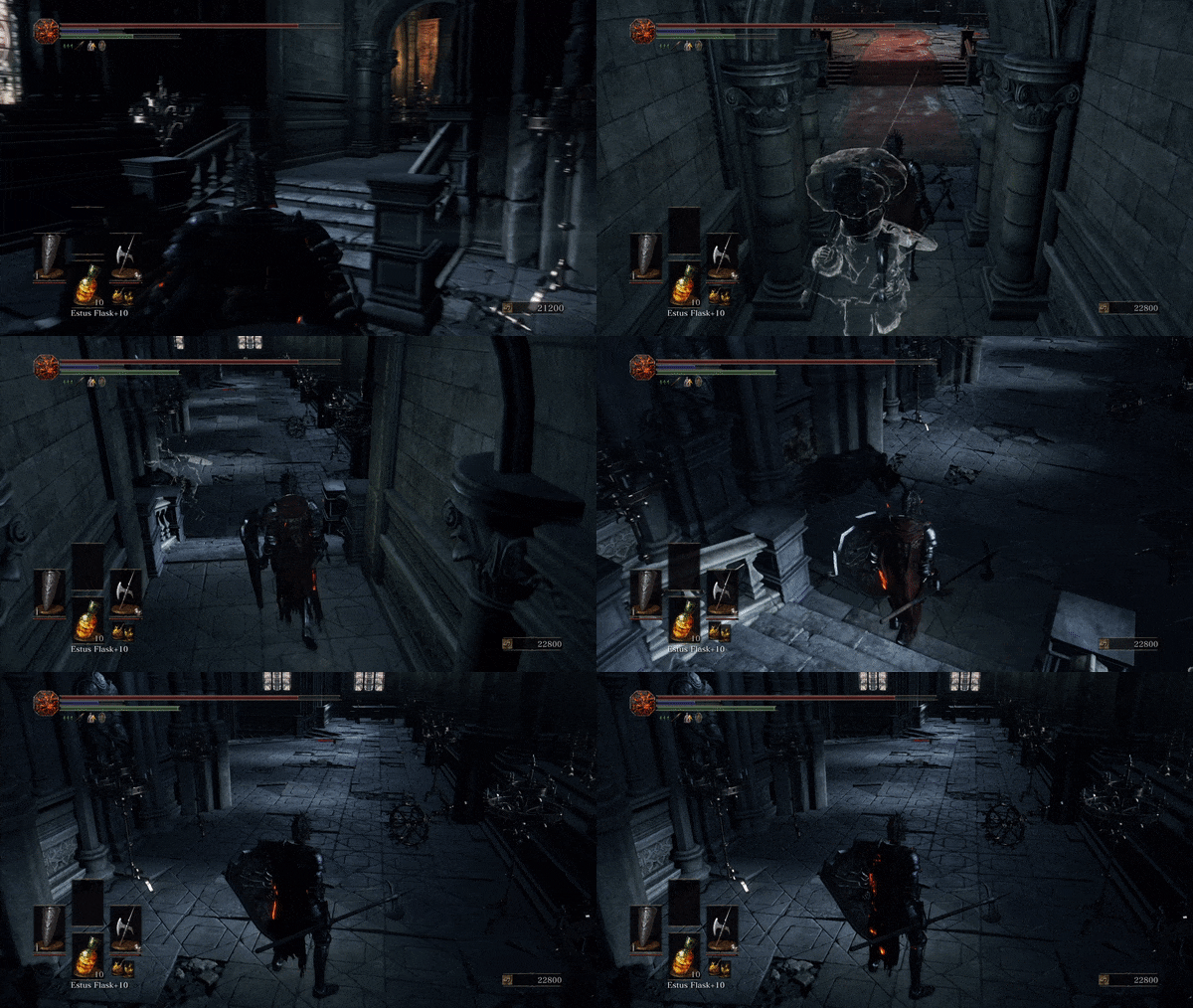
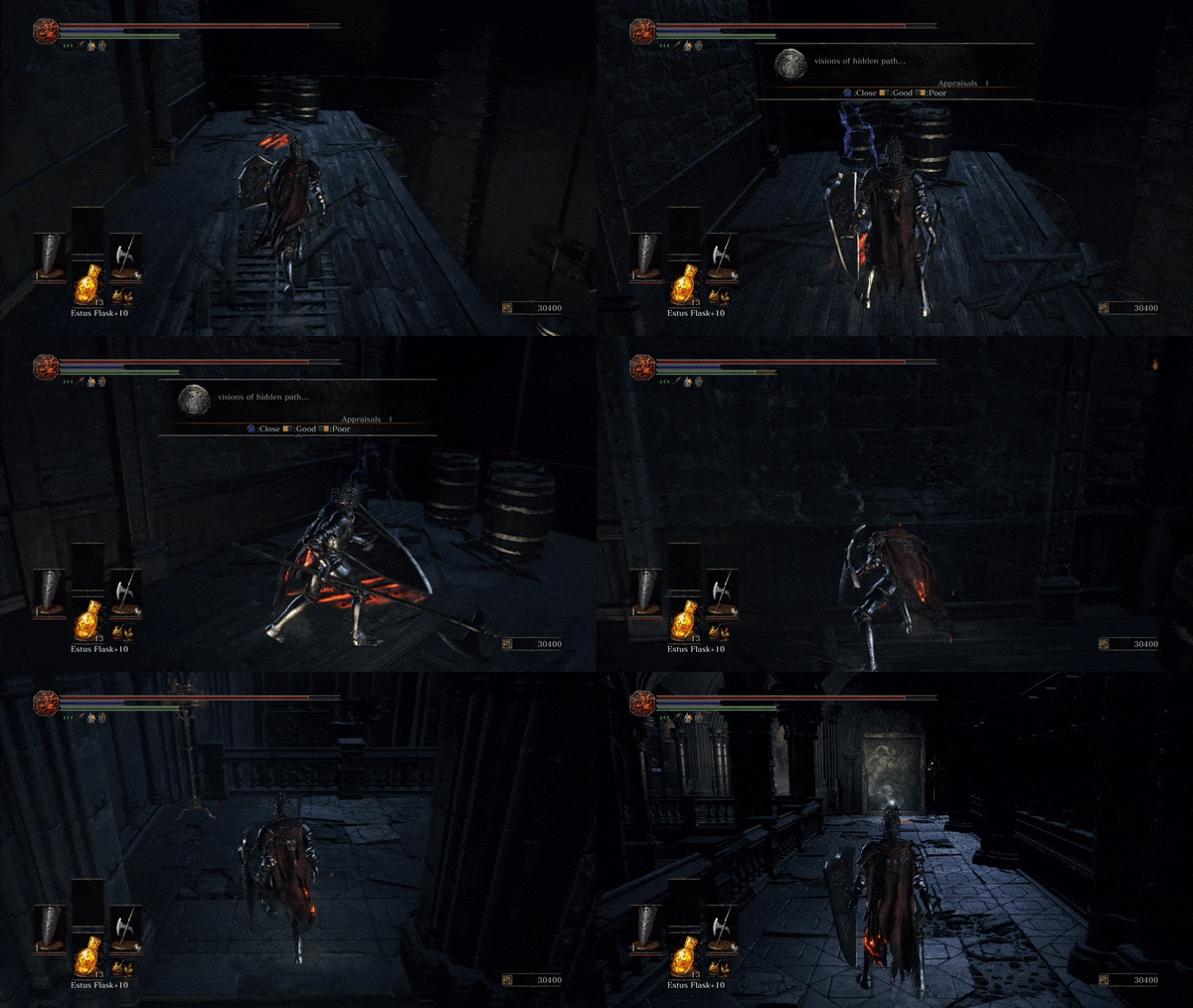
Perhaps it seems an odd choice to begin an exploration of how single-player games connect people by looking at a multiplayer-enabled series, but the Dark Souls games and their “spiritual predecessor”, Demon’s Souls, truly embody the concept of playing alone, together. I would argue that the Souls games, as they are known, can be most accurately thought of as single-player games with incidental and highly-limited interactions with other online players. In fact, the Souls games all have “Offline Modes” where no multiplayer interaction occurs, and “Online Modes,” which allow very specific and intentional interactions between players to occur. The most common form of these interactions are the notes that players can leave for each other throughout the game worlds. These notes can only be created with the in-game formula, with a set number of verbs, nouns, and phrases that players can string together to provide helpful (or unhelpful) messages to leave for other players. Common messages include “try attacking” or “illusion ahead” in notes placed in front of illusory walls, which when struck reveal hidden areas of the game. I have been aided countless times by helpful messages such as these in finding hidden areas in the Souls games which I never would have stumbled across on my own. Other common examples include advice about dealing with specific enemies, especially bosses, or warnings about traps or imminent ambushes. This note system serves as a sort of in-game way for players to give each other advice, to share their discoveries, and to learn from one another. The players may never see each other’s characters, but are able to share advice and commentary asynchronously from their individual experiences of the game.
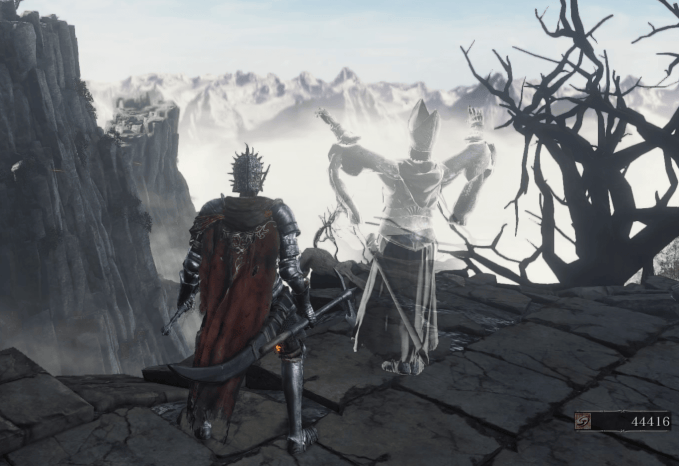
Another system in the Souls games that establish them as primarily single-player games with limited multiplayer aspects is the “phantom” system. Each player in a Souls game has their own world, in which they are the only player-character, however players can temporarily enter each other’s worlds as phantoms. Phantoms come for a limited time and with a specific purpose: usually to assist the host player with a level or boss or to kill the host. Phantoms may be NPCs or player-controlled characters and can actually be difficult to determine which they are, especially for players unfamiliar with the lore and characters in the series (no, XxN00bSlayerxX is actually not an NPC in the series). Players generally do not have much control over whose game world they enter or who enters their world or when, and as such, multiplayer interactions are quite haphazard, making them feel quite incidental. Probably the most relevant and interesting form of phantoms in our focus are the phantoms that are merely projections of other players, going about their business in their own game worlds. These phantoms cannot affect your game world; in fact, you can run right through them. They seemingly cannot see you and likely have no idea they are being watched. These phantoms just appear in passing as small glimpses into the parallel journeys that other players are going through on their own, alongside you. You can’t directly interact with them, but seeing them and knowing that they are on their own arduous, solitary journeys, just like you, can create deep feelings of solidarity. In this way, the Souls games, to me, can be interpreted as profound allegories for life; how we are all on our own individual, trying journeys interspersed with messages, glimpses, and chance interactions with one another, appearing as phantoms in each other’s worlds.