
While there are many ways to play single-player games together with others, such as playing parallel playthroughs or serving as a guide to other players, playing a shared playthrough of a single-player game with another person is one of the potent bonding experiences I have known. Since there is only one player character (PC), the players must work together to develop a unified playstyle and a cohesive character, a process which necessarily involves much discussion, strategizing, and compromising. While it may not be the way most single-player games were intended or expected to be played, you might be surprised how well it can work and how much fun it can be.
A truly shared playthrough involves much more than simply “switching off” with one another, especially in RPGs, which are especially well suited to the practice. In RPGs, traditionally the player develops a PC with a particular build: a set of skills, abilities, and equipment; as well as a playstyle that suits this build. Thus, in a shared playthrough, the player-partners must develop a build together that suits both (or all) of their playstyles, which should also be refined to align and/or complement each other. Developing such a build is a complicated negotiation between the players.
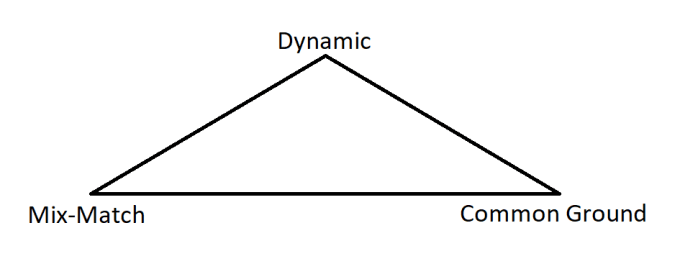
A shared build must be tailored to both (or all) of the players who must use it. One way this can be accomplished is by creating what could be called a mix-match build: a build that suits itself to different playstyles, with different players specializing in different styles. For example, if two players are playing a fantasy RPG together and one of them excels in close range combat while the other is skilled with a bow and arrow, the two could devise a shared build that is suited to both close range combat and archery, and pass the controller off as their different skillsets are called for. The main downside with this strategy is that because the skills, abilities, and or equipment that comprises the build is distributed across multiple playstyles, it may not be as strong of a build for either player as would a a build specialized to each of their styles. This drawback suggests the opposing strategy of creating a build suited solely to a unified playstyle that each of the players would have to adopt to become effective with it: the common ground build. To apply this strategy to the previous example, perhaps both players agree that making a build suited to both melee and ranged combat is ineffective, and since they are both moderately good with magic, they will instead make a build that focuses exclusively on using magic and adapt their playstyles to effectively use their build. The drawback here is that playstyles are more limited and the unique skillsets of the different players may not be used effectively. A strategy that presents itself as both a compromise and alternative to the previous two strategies is to develop a dynamic build, which is based on a foundation of shared skills of the players and able to be fine tuned to each of their playstyles to an extent. What this could look like for the same two players in their shared RPG playthrough is a character build centered around a core of useful spells that both players can incorporate into their playstyles and an extended set of equipment that they can switch between: a set of heavy armor and swords for the melee player’s playstyle and light armor and a bow for the other, which they can equip when they pass off control over the character. Both players could use healing and defensive spells and a different set of equipment that suits the different combat aspects of their playstyles. These build strategies exist on a spectrum and players can create shared builds that lie somewhere in the middle of these categories.
Beyond creating builds and coordinating playstyles, players must also figure out how to navigate making collective decisions which might impact the story and gameplay for the rest of the game. Players might decide to give full control to the one with the controller. More likely, however, players will want to discuss and perhaps even debate what to do during pivotal moments, especially when the choice will have lasting effects in the game. While playing alone, one might just make a quick decision and move on, but being part of a partnership in a shared playthrough means that there will be multiple perspectives and your partners may challenge you, forcing you to give more thought, consider different angles, and come to a collective decision.
Going through a shared playthrough of a single-player game with a partner or two is a unique experience in that all players must come together to act as one. It forces you to strategize and plan together, develop a build and suitable playstyle(s), discuss and debate important in-game decisions, thereby paying more attention and considering more angles than you might on your own. A shared playthrough can be a learning experience, about the game and about your friendships. In my personal experience shared playthroughs have not only strengthened many of my friendships but have given us whole worlds of shared experiences we still reminisce on years later. So if you and a friend or two are looking for a game to explore together, maybe an old favorite of yours to rediscover, don’t rule out single-player RPGs; a shared playthrough can be an unexpectedly rich experience.


One thought on “Shared Playthroughs”